

If you've ever been through a website project that dragged on for months, went over budget, or just didn't hit the mark — you're not alone.
Most projects that go wrong don't fail because of design or development issues… they fail because they started with a vague or incomplete brief.
Before you hire a designer or agency, taking the time to create a clear, detailed website brief can save you thousands of dollars, weeks of frustration, and a lot of awkward conversations later on.
At Eklektik Creative, I've seen this time and again. When expectations, goals, and deliverables are clearly defined, projects run smoothly. When they're not, scope creep kicks in — and everyone loses.
This article walks you through what to include in a strong website brief so you get better results, fewer surprises, and a website that genuinely helps your business grow. It's based on The Complete Website Planning Guide by Darryl King, paired with what I've learned managing websites for real-world clients for over 25 years.
Why a Website Brief Matters
A website brief is your project's foundation. It explains what you need, why you need it, and how success will be measured.
Think of it like architectural plans for your home — you wouldn't build without them. The same principle applies online: the clearer your plan, the better the outcome.
A strong brief gives your designer everything needed to quote accurately, design effectively, and deliver on time and budget. Without it, your project drifts, costs rise, and no one's quite sure what "finished" means.
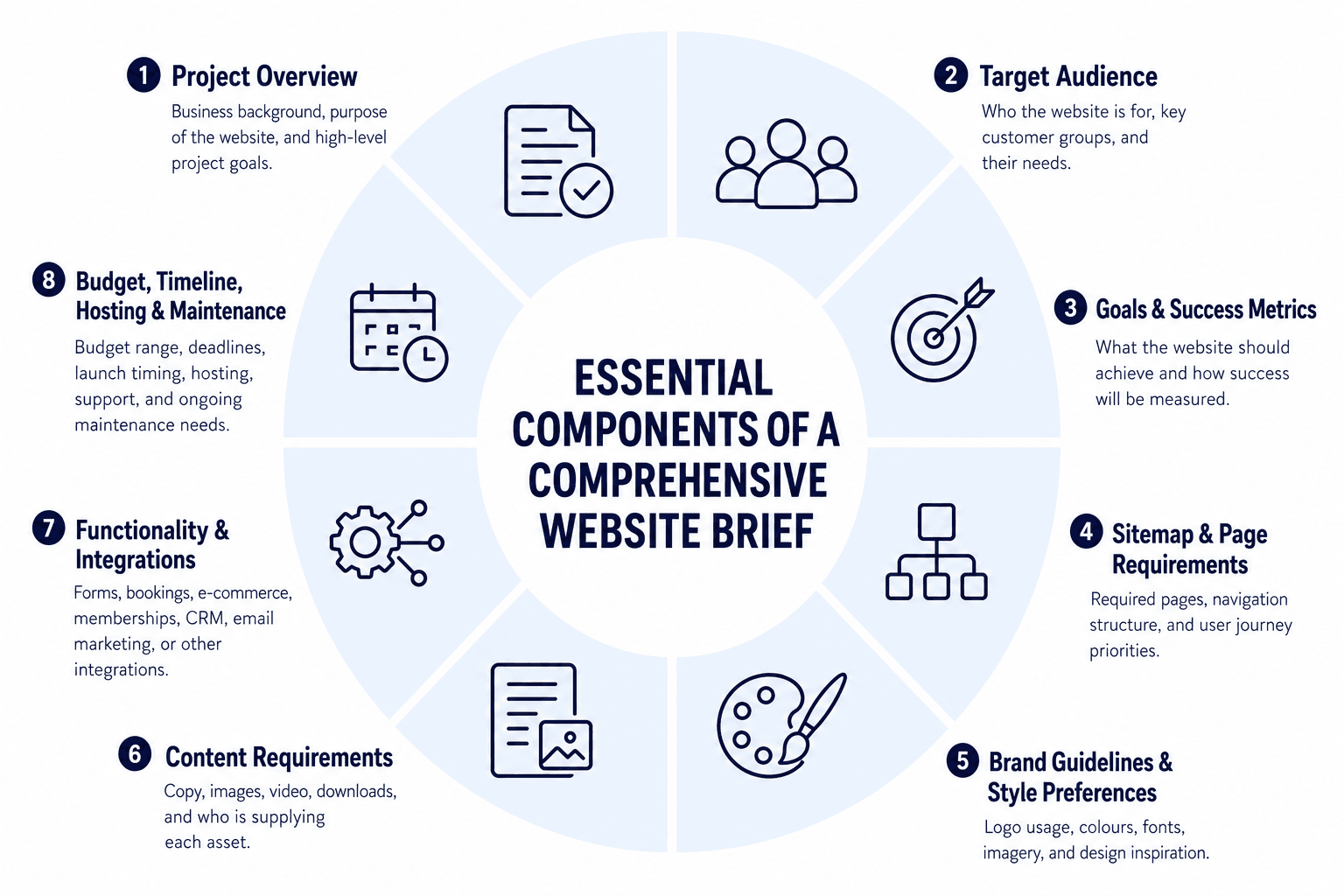
What to Include in a Website Brief
Here's what separates a clear, professional website brief from a "let's just wing it" one.
1. Define Your Website Goals
Every great project starts with purpose. Ask yourself:
- What do you want your website to achieve?
- What does success look like six months after launch?
It might be generating qualified leads, increasing bookings, or building authority in your space. The key is to make these goals specific and measurable — not "make it look modern," but "increase leads by 30% in six months."
Your goals keep every decision grounded. When a new idea pops up mid-project, we can ask, "Does this serve our main goal?" — and if it doesn't, it waits for phase two.


2. Know Your Audience
A successful website isn't built for everyone — it's built for the right people.
One of the first things I do with clients is unpack who their ideal customers are. Who are they? What do they care about? What are they searching for when they land on your site?
In The Complete Website Planning Guide, Darryl King calls these personas your "Jennies" — clear snapshots of your ideal customer. When we know your audience, we can build a site that speaks to their needs, not just your business goals. That's what creates connection — and conversions.
3. List Your Must-Have Features
Every business has a few non-negotiables — the elements that make your operations run smoothly.
That might be:
- A booking form that integrates with your calendar
- eCommerce functionality linked to your inventory
- A client portal or resources library
- Newsletter or lead capture system
- Legal or compliance pages
Document these early. It ensures we plan for them before design begins — not after the budget is spent. This is where many projects blow out. A great website brief protects you from that.
4. Do Your Research
Your website shouldn't be built on assumptions. Good briefs include real-world insights — like what's working (and not working) on your current site.
Check your analytics. Look at which pages people visit, where they leave, and which ones drive conversions. Then review competitors: what are they doing well, and where can you do better?
When you bring this data into your website brief, it helps me design strategically — with evidence, not guesswork.
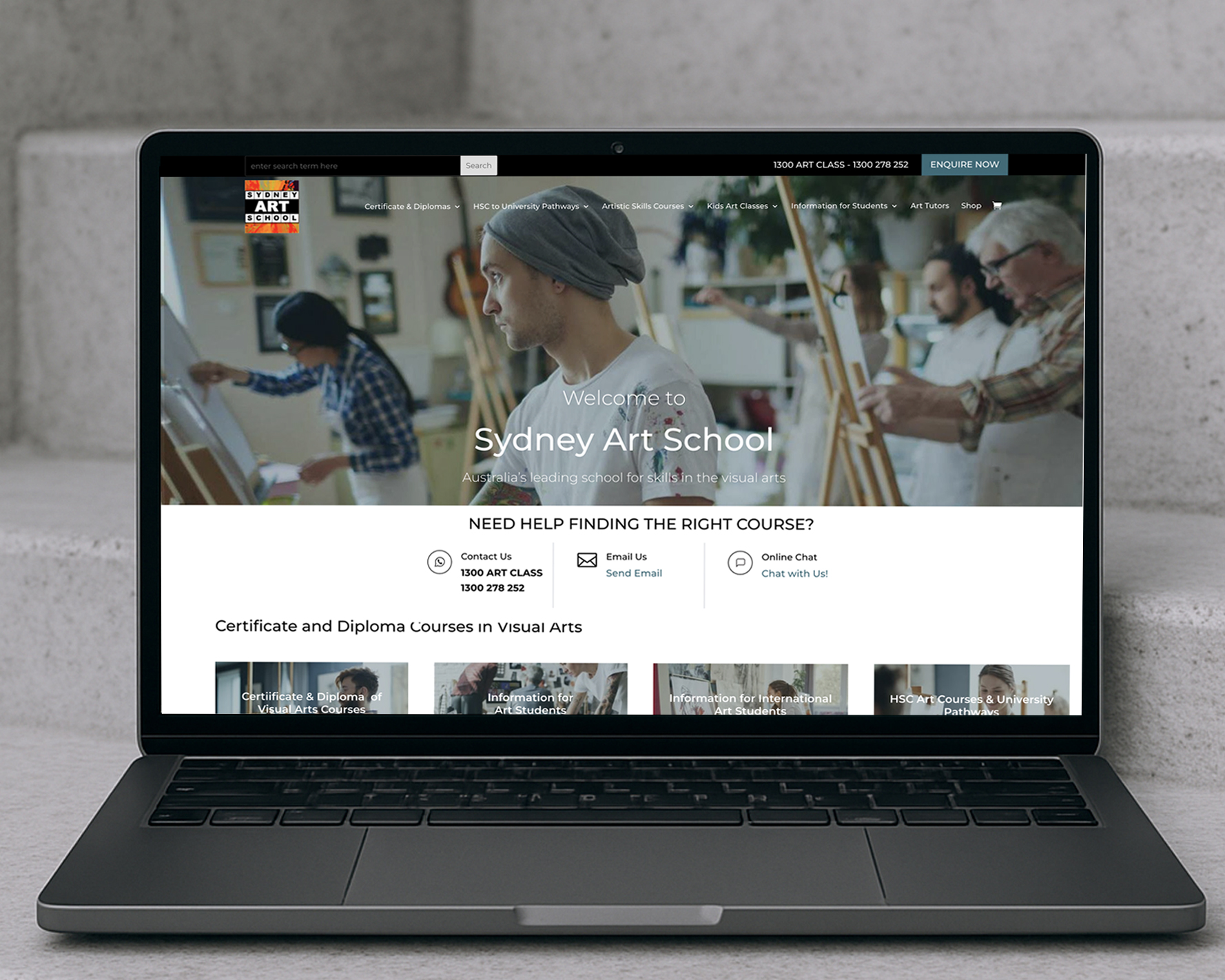
5. Map Out Your Sitemap
A sitemap is simply a visual layout of all your pages and how they connect.
It gives us a bird's-eye view of your site structure and ensures nothing important gets missed. I often sketch this collaboratively with clients during the planning stage — it's quick, visual, and clarifies exactly how users will move through your site.
A clear sitemap also makes quoting accurate — because we both know exactly how many pages and templates are being created.
6. Define the Scope of Each Page
Once the sitemap is done, the next step is scoping each page.
This is where we outline:
- The goal of the page
- The type of content needed
- Calls to action
- Special features or integrations
For example:
Page: Services
Goal: Educate and convert visitors into inquiries
Content: Service overviews, testimonials, clear CTAs
Extras: Enquiry form and FAQ accordion
When each page is scoped, nothing gets missed — and your content writer, designer, and developer all work from the same playbook.
Why a Tight Website Brief Prevents Scope Creep and Budget Blowouts
Here's the honest truth: Every project that's gone off the rails in my career started with a vague brief.
When details aren't nailed down, someone ends up paying for it — either the client, because the cost climbs, or the designer, because they eat the extra time.
Scope creep happens when new requests slip in mid-project. "Can we just add a shop?" "Can you connect this to our CRM?" Without a clear brief, those requests seem harmless — until they snowball.
A tight website brief prevents that. It sets boundaries, defines deliverables, and protects everyone involved.
It outlines:
- What's included and what's not
- Who's responsible for each piece (content, images, logins)
- How success is measured
When something new comes up, we can easily say, "That's a great idea — let's plan that for phase two."
That's how you stay on time, on budget, and on good terms.
A detailed brief isn't just a planning document — it's a protection policy for both sides. It ensures transparency, profitability, and trust from day one.
Common Mistakes to Avoid
A few traps I see often when clients approach a new website project:
- No plan at all. Skipping the brief is like building a house without blueprints.
- Copying another site. Inspiration is fine — imitation rarely works.
- Unclear budgets. You can't prioritise features if you don't know what's affordable.
- Too little detail. A vague "we'll know it when we see it" approach leads straight to rework.
- Ignoring content. Your visuals depend on your message — plan both together.
Avoid these, and you'll already be miles ahead of most projects.
The Takeaway
A website brief isn't bureaucracy — it's insurance.
It ensures you and your designer are aligned on goals, deliverables, and budget from the start. When done properly, it keeps your project focused, efficient, and built to perform.
At Eklektik Creative, I walk every client through this process because it's how we deliver websites that not only look beautiful, but actually work.
As Darryl King puts it:
"A scope is simply a blueprint for success — a thought-out set of drawings and specifications that allows you to get the exact result you want, or better."
Ready to Create Your Website Brief the Right Way?
If you're planning a new website or a redesign, let's start the right way — with strategy and clarity.
At Eklektik Creative, I help businesses plan, design, and launch websites that not only look amazing but are built around real goals, smart structure, and solid ROI.
Book a quick strategy call and we'll talk through your project, your audience, and what your website really needs to achieve. By the end, you'll know exactly what should go into your website brief — and how to move forward with confidence.
👉 Book a Website Planning Call or visit eklektikcreative.com to get started.